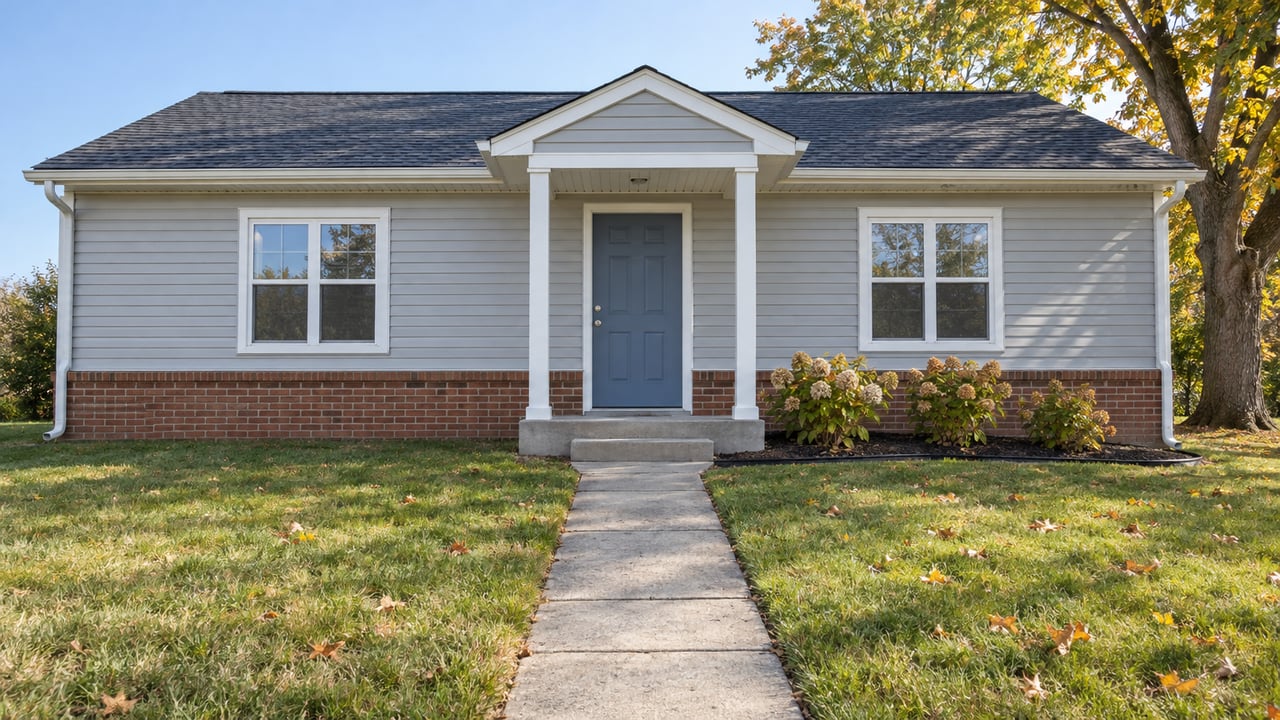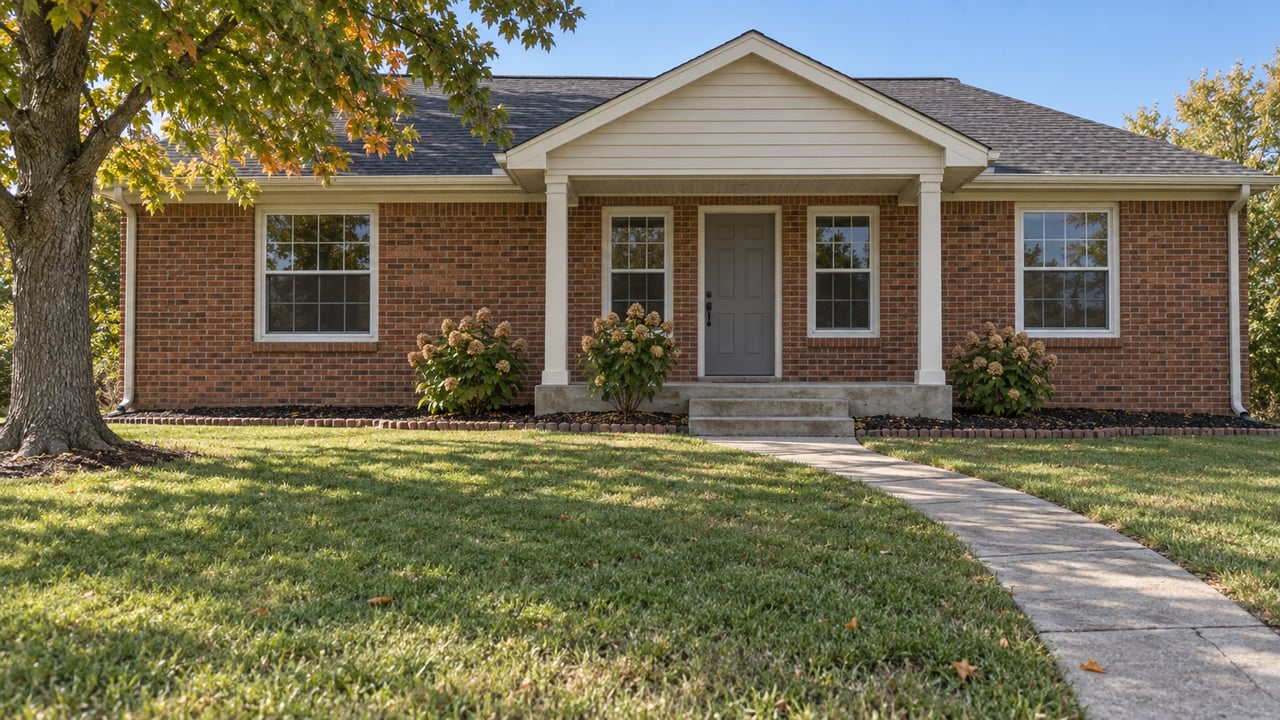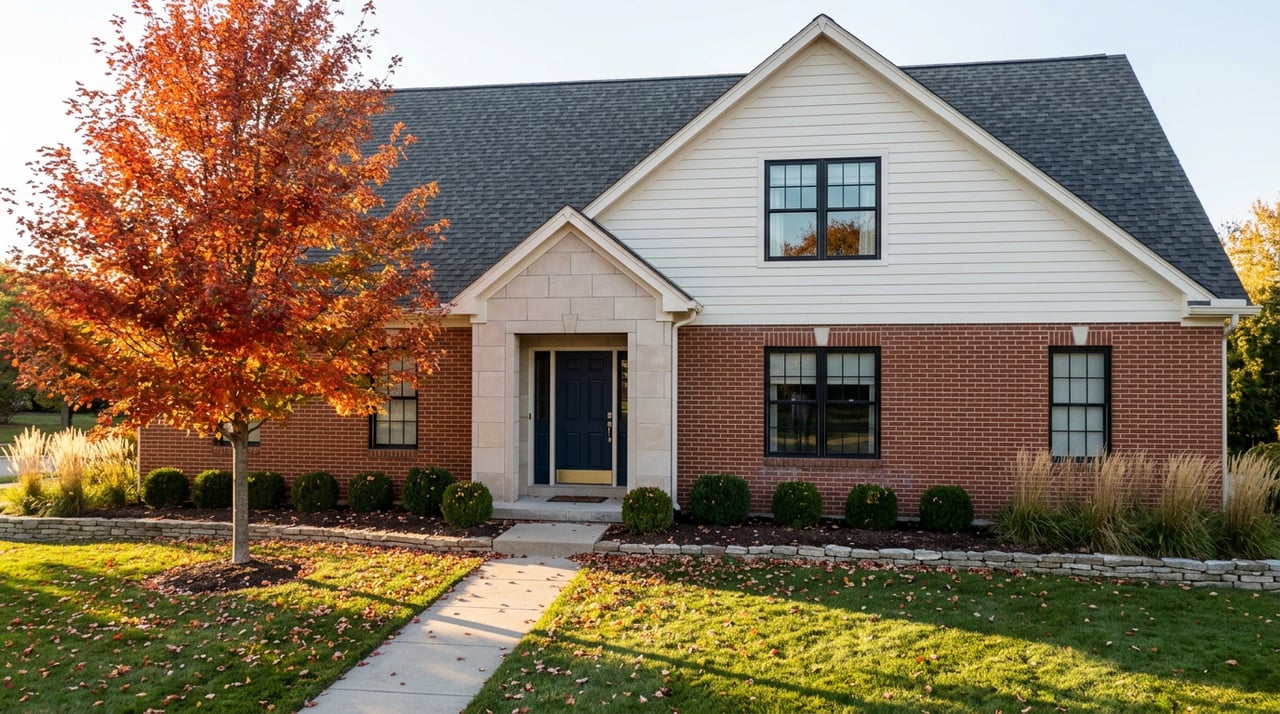
Drive north on US-41 from Vincennes toward Oaktown and you pass two conversations happening at the same time. In the fields, a farm manager is telling a landowner that cropland offers stopped chasing this year. In town, a young family is losing a bid on a three-bedroom that sat on the market for six weeks last spring and cleared in eleven days this one.
Both stories are true. They are also happening inside the same county lines.
If you are shopping Knox County by median price alone, you are looking at an average of two markets that are moving in opposite directions. The leverage sits on different sides of the table depending on which one you walk into.
The split in one table
The Purdue Farmland Value and Cash Rents Survey and Redfin's county tracker capture the divergence cleanly. Knox County sits inside Purdue's Southwest region, one of only two Indiana regions where farmland values fell in 2025.
| Segment | Latest reading | Direction |
|---|---|---|
| Southwest Indiana farmland, all grades | Down 4.6% to 11.3% in 2025 | Softening |
| Statewide top-quality farmland | $14,826 per acre, +3.0% YoY (June 2025) | Rising, slower |
| Statewide recreational land | $9,542 per acre, +18.0% in 2025 | Rising, fast |
| Knox County residential median | $162,000, +13.7% YoY (February 2026) | Rising, fast |
| Knox County days on market | 47 days, down from 88 a year earlier | Tightening |
The residential column looks like a hot market. The farmland column looks like a soft one. Both readings are current, and both apply to ground inside Knox County.
Why cropland cooled while homes tightened
Farmland prices track farm economics, not local buyer demand. Purdue's 2026 Crop Cost and Return Guide points to tight operating margins, lower expected corn and soybean prices, and input costs still well above pre-COVID levels. Indiana net farm income is projected to fall 28% heading into 2027. The Federal Reserve of Chicago reported Indiana farmland up about 6% year over year in 2025, but nearly flat from quarter to quarter, a signal that the market is stabilizing after several years of fast gains.
The Southwest region's decline is the sharper version of that story. Purdue survey respondents expect Southwest values to keep drifting down through the back half of 2025 before flattening in 2026. That is not a distress signal. It is a repricing after a run.
The residential story is a supply story with names attached. A 2021 housing study commissioned by Knox County Indiana Economic Development flagged a need for hundreds of new units. The response is only now arriving on the ground.
The residential supply story has names attached
The largest single project is Bierhaus Flats, a $35 million, 240-unit market-rate apartment complex on Bierhaus Boulevard in Vincennes. Simplified Developments, a Gibson County family firm led by Phil Reinbrecht, broke ground in mid-2024 with a $3.1 million Indiana Finance Authority award supporting residential infrastructure. The first 24 units opened in June 2026, and KCIED CEO Chris Pfaff has said they pre-leased quickly. The remaining buildings are phasing in through 2027.
Twenty miles north in Bicknell, the city has been acquiring aging parcels, clearing the sites, and selling cleaned-up lots to qualified developers for as little as $1,000. More than twenty homes have gone up under that program. Business View magazine profiled the initiative in a January 2026 feature. Broadway Place is bringing additional single-family tracts and duplexes.
Two demand-side items belong on the same page. Amazon announced a 104,000-square-foot delivery station in Vincennes in February 2026. KCIED's MakeMyMove partnership is paying qualified out-of-state households, on terms partially underwritten by the State of Indiana, to relocate to Knox County, with a target of 15 new households by December 2026 and eligibility gated to full-time workers earning at least $55,000 who can move within six months.
New units are arriving, but so are new households and new jobs. That is how the existing-home segment can hit a 13.7% year-over-year median gain and half its previous days-on-market with only 15 sales in the reference month.
What your money actually buys right now
The county contains four buying propositions, and they are not the same trade.
Cropland. The 2025 Purdue survey put statewide top-quality farmland at $14,826 per acre, average-quality at $12,254, and poor-quality at $9,761. Southwest region values sit below those statewide averages because they moved down in 2025 while the north moved up. On the ground, recent Schrader Real Estate and Auction Co. offerings inside Knox County have included tracts with productive Ragsdale, Patton, Sylvan, Nolin, Haymond, Armiesburg, and Iona soils, some with irrigation wells already in place and White River water for pivot systems. Statewide cash rents settled at $318 per acre for top-quality, $264 average, and $207 poor, with softer rent behavior in the Southwest.
Recreational and wooded tracts. This is the segment most likely to surprise a buyer looking only at cropland comps. Statewide recreational land jumped 18% in 2025 to $9,542 per acre. Knox County has real inventory here along the White River corridor, in the wooded portions of larger farm tracts, and around reclaimed mining ponds south of Bicknell. A 819-acre Tolan estate auction near Oaktown in October 2025 offered wooded hunting tracts alongside its 670 cropland acres. Recreational buyers are competing with a different pool than row-crop buyers, and that pool is bidding up.
In-town lots and new construction. Bicknell's $1,000 lot program is the anomaly. It exists because the city owns the inventory and is trading price for build commitments. A conventional infill lot in Vincennes does not price like that. New-build absorption is being tested in real time by Bierhaus Flats and Broadway Place.
Existing single-family homes. This is the segment that moved 13.7% in the trailing year, with days on market cut nearly in half. LandWatch recently listed roughly $31 million of Knox County land across about 455 acres with an average listing near $233,000, useful as a boundary marker for what small acreage with a house on it is asking.
The transaction friction most buyers miss
Land in Knox County trades under auction terms more often than residential buyers expect. That changes the rules mid-transaction.
Terms on recent Knox County land auctions have required 10% down on the day of the auction, closings in roughly 60 days, and bids that are not conditional on financing. Some sales carry a 3% buyer's premium added to the hammer price. Mineral rights vary sharply between offerings. Some sellers convey 100% of any mineral rights they own, others reserve all minerals including oil, gas, coal, coalbed methane, and metallic minerals. If a property sits over the Illinois Basin coal seam or near active oil production, that reservation matters at resale.
Two other frictions surface in the closing packet. Survey costs on multi-tract offerings are commonly split 50/50 between buyer and seller when new boundaries are created, and combined-tract buyers may receive perimeter surveys only. Some tracts also carry deed restrictions tied to Army Corps of Engineers mitigation work, which can constrain future ground disturbance in ways a residential buyer would never encounter.
A residential purchase inside Vincennes or Bicknell looks nothing like this. The habits transfer badly in both directions.
Who has leverage today
Sellers of quality single-family homes in Vincennes and Bicknell are working in a tight segment with rising prices and shorter days on market. They can be firmer on price than they could in early 2025.
Sellers of Southwest Indiana cropland are working against a repricing. The Purdue survey says buyers in this region have negotiating room they did not have two years ago. Well-marketed, well-drained tracts near existing operations still clear at strong numbers. Rougher ground, or ground competing against thin farm margins, has to work harder.
Recreational buyers are the ones losing ground fastest. That 18% statewide jump is real, and Knox County's mix of tillable, wooded, and water features draws hunters, weekend owners, and small-lake buyers into competition with each other.
FAQ
Does the Southwest region's farmland softening mean the residential market is next? The two segments trade on different fundamentals. Farmland responds to crop margins and interest rates. Residential is responding to a supply pipeline that finally arrived and a demand pipeline pulled in by Amazon, MakeMyMove, and manufacturing expansion. A soft cropland number does not forecast Knox County home prices.
Is now the time to sell recreational acreage separately from tillable ground? Sometimes. A tract with genuine hunting value, water frontage, or building-site potential often prices higher offered on its own than blended into a cropland package. Recent Schrader and Peabody auctions in Knox County have used multi-tract formats specifically to let those segments find their own buyers.
What should a home buyer know about closing timelines here right now? With days on market near 47 and inventory thin, offers are moving faster than in 2024. Pre-approval, a clear proof of funds for down payment, and clean inspection contingencies are carrying more weight than escalation language.
Do land auction terms apply to residential auctions too? The mechanics are similar. Non-contingent bidding, 10% down day-of, and 60-day closings are standard on the residential side as well. Buyer's premiums vary by auction company.
Whether you are weighing a cropland tract near Oaktown, a wooded parcel along the White River, or a house on a Vincennes side street, the right move depends on which of Knox County's two markets you are actually shopping. Klein Real Estate works both sides of that line every week, from residential listings to farmland auctions. When you are ready to price your property against current conditions rather than last year's, Get an Instant Home Valuation and we will take it from there.