If you are weighing whether to lease or buy commercial space in Vincennes, you are probably balancing more than a monthly payment. You may be thinking about cash flow, long-term plans, visibility, permits, and whether the space truly fits your business. This guide will help you compare both paths in a practical, local way so you can make a smarter decision with more confidence. Let’s dive in.
Why location matters in Vincennes
In Vincennes and greater Knox County, commercial space decisions often connect directly to access, operating cost, and the kind of business you run. Local economic-development materials point to a workforce supported by Vincennes University and training pipelines in advanced manufacturing, building and construction, health and life sciences, information technology and business services, and transportation and logistics.
That broader local economy helps shape what businesses need from a property. Some owners need visibility and customer access, while others need room for equipment, storage, or delivery routes. In short, the right lease-or-buy decision starts with understanding how your location supports your day-to-day operations.
Common commercial space types
Downtown storefronts
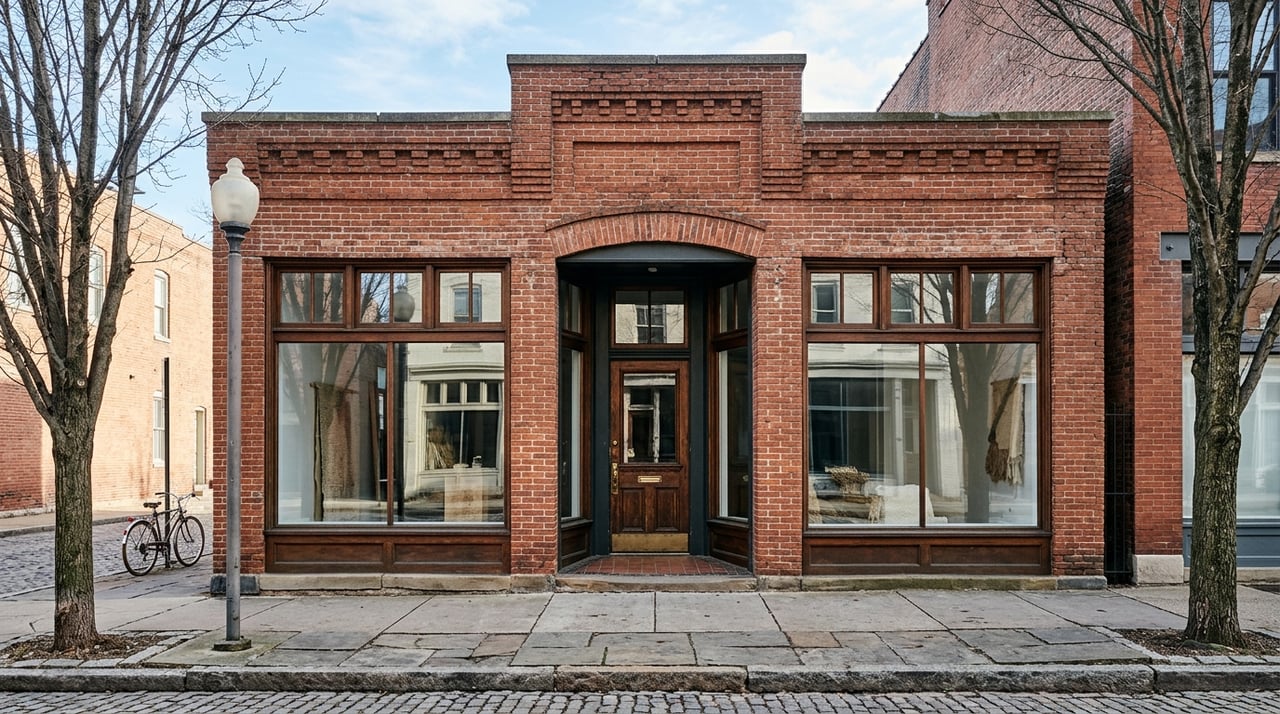
If your business depends on walk-in traffic, visibility, or a classic streetscape, downtown Vincennes may be the first place you look. County planning guidance identifies Downtown Vincennes as a key commercial area and encourages enhancement in the downtown riverfront historic district.
That said, historic character can come with extra review steps. If you are considering an older downtown building, improvements may require historic-review approval before work moves forward.
Hart Street and 6th Street corridors
Hart Street and 6th Street are identified in county planning guidance as major commercial-development areas. For many businesses, these corridors can offer practical advantages like roadway access, parking, and more conventional retail or office layouts.
If you want a customer-friendly location without some of the added complexity that can come with historic properties, these corridors may be worth a close look. They also remain important parts of the local commercial landscape based on planning and development materials.
Flex, warehouse, and industrial space
If your business needs loading space, storage, utility capacity, or a larger footprint, you may compare properties on the edges of town or in areas tied to industrial growth. County planning documents discuss future industrial expansion, and local development materials highlight Knox County’s logistics and supply-chain capacity.
That makes flex and industrial-style space a natural option for businesses with trucks, equipment, inventory, or production needs. In these cases, function may matter more than storefront visibility.
When leasing makes more sense
Leasing usually works best when flexibility is your top priority. If you are testing a business concept, entering a new market, or trying to preserve cash for staffing, inventory, or equipment, a lease may give you more breathing room.
According to SBA guidance, leasing can require less cash or credit upfront. In some cases, it may also be less expensive than buying with a high-interest loan, and some leases may include a buyout option at the end.
Leasing can also help if you are still learning what your business needs from a space. You may not yet know how much parking you need, whether signage will be enough, or if your current footprint will still work in three to five years.
Key advantages of leasing
- Lower upfront cash need in many cases
- More flexibility if your business plans change
- Easier to test a location before making a long-term commitment
- Lease payments are typically tax deductible, according to SBA guidance
Tradeoffs to keep in mind
- You usually do not build equity in the property
- Your long-term total cost is often higher than buying
- Your ability to make major improvements may be limited by the lease
- Future rent changes can affect operating costs
When buying may be the better move
Buying commercial space often makes more sense when your business has a stable footprint and expects to stay put for the long haul. If you know the location works, can handle the upfront commitment, and want more control over the property, ownership may be worth serious consideration.
SBA guidance notes that buying can allow depreciation, is usually cheaper over the life of the asset, and turns the property into a balance-sheet asset. For many owner-occupants, buying also makes it easier to justify permanent improvements because you are investing in your own real estate.
Ownership can be especially appealing if your space needs are specialized. If your business requires a custom layout, a particular parking setup, or operational features that would be hard to negotiate in a lease, buying may offer more control.
Key advantages of buying
- Greater long-term control over the property
- Opportunity to build equity
- Potential depreciation benefits noted by SBA guidance
- Often lower lifetime cost compared with leasing
- More freedom to plan long-term improvements
Tradeoffs to keep in mind
- Higher upfront cash commitment
- Ongoing responsibility for taxes and many property costs
- Less flexibility if your business needs change quickly
- More due diligence before closing and before making improvements
Financing and taxes in Indiana
If you are leaning toward ownership, financing structure matters. SBA 504 loans can be used for existing buildings, land, new facilities, and certain improvements. The program offers long-term fixed-rate financing with 10-, 20-, and 25-year maturities, with a maximum loan amount of $5.5 million.
Indiana property taxes should also be part of your decision. The Indiana Department of Local Government Finance says commercial and other nonresidential property is generally subject to the 3% property-tax cap.
It also states that Indiana property taxes are paid in arrears and are typically due May 10 and November 10. Assessed value can include personal property used in the production of income, which means your tax picture may involve more than just the building itself.
Vincennes approvals can change the answer
Even if a property looks perfect on paper, zoning and permit requirements can quickly affect whether leasing or buying makes sense. Before you sign a lease or close on a building, confirm that the property supports your intended use.
Inside Vincennes city limits, the City Inspector’s Office handles building and remodel permits, sign permits, historic-review applications, and Board of Zoning Appeals matters. Outside the city limits, the Knox County Area Plan Commission handles county zoning, improvement-location permits, variances, conditional uses, and related requests.
That city-versus-county distinction matters more than many buyers and tenants expect. A property just outside city limits may fall under a different review process than one inside the city.
Questions to answer before you commit
- Is the property inside Vincennes city limits or under county zoning?
- Is your intended use permitted at that location?
- Will you need a zoning variance, conditional use, or improvement-location permit?
- Do your signs, parking, or renovations need separate approval?
- Is the building in an area where historic review may apply?
Local incentives may influence your choice
Some commercial properties may benefit from local redevelopment or tax-related programs. The City of Vincennes notes that the Redevelopment Commission oversees the Tax Increment Finance district, and businesses in the Vincennes Urban Enterprise Zone may be able to access tax savings if they meet program requirements.
County planning guidance also identifies the Hart Street corridor as a TIF area and notes the use of EDIT dollars and infrastructure spending to support industrial and commercial sites. Depending on the location, these tools may make one property more attractive than another.
This does not automatically mean buying is better than leasing. It does mean you should look at the property’s district, corridor, and redevelopment context before making a final call.
A simple lease vs. buy framework
If you are still unsure, a side-by-side comparison can help simplify the decision.
| Factor | Leasing | Buying |
|---|---|---|
| Upfront cost | Usually lower | Usually higher |
| Flexibility | Higher | Lower |
| Long-term equity | No | Yes |
| Control over property | Limited by lease terms | Greater control |
| Lifetime cost | Often higher | Often lower |
| Best for | Testing, preserving cash, short- to mid-term needs | Stable operations, long-term plans, customized space |
How to decide in Vincennes
For many local business owners, leasing is the better fit when flexibility matters most. It can be a smart move if you are proving a concept, preserving capital, or still narrowing down the best corridor, storefront, or industrial setup.
Buying is often the better fit when your business has a stable footprint, wants long-term control, and can carry the upfront and ongoing costs. In Vincennes, that decision should include more than price alone. You also need to weigh zoning, historic-review requirements, property taxes, and whether a site sits in a corridor or district with local incentive potential.
A good commercial decision is rarely just about the building. It is about how the property fits your operations today and supports your next step tomorrow.
If you are comparing commercial properties in Vincennes or Knox County, working with a local team can help you narrow options, understand the process, and move forward with confidence. Connect with Klein Real Estate to explore commercial sales and leasing opportunities with local insight.
FAQs
Should you lease or buy commercial space in Vincennes if your business is new?
- Leasing is usually the better fit when you want to preserve cash, stay flexible, or test whether a location works for your business.
What commercial areas are commonly considered in Vincennes?
- County planning guidance identifies Hart Street, 6th Street, Downtown Vincennes, and Bicknell as main commercial-development areas.
What permits might affect commercial space in Vincennes?
- Depending on the property and project, you may need approvals related to building, remodel work, signage, zoning, Board of Zoning Appeals matters, or historic review.
Who handles zoning for commercial property in Vincennes and Knox County?
- Inside Vincennes city limits, the City Inspector’s Office handles related city matters, while outside the city limits, the Knox County Area Plan Commission handles county zoning and improvement-location permits.
What Indiana property tax issues matter when buying commercial space?
- Commercial and other nonresidential property is generally subject to Indiana’s 3% property-tax cap, taxes are typically due May 10 and November 10, and assessed value can include personal property used in producing income.